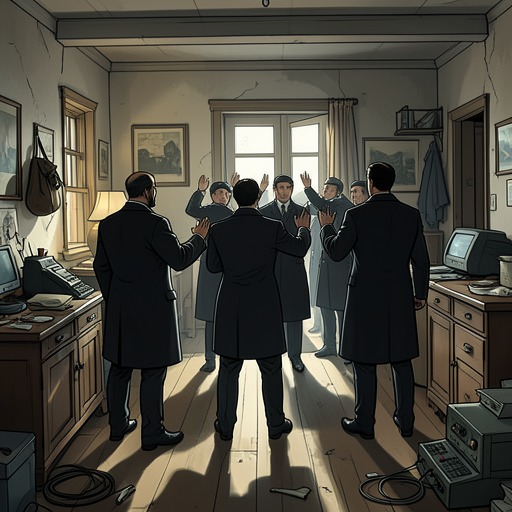
Last Westerbork transport to Auschwitz
Diary of Anne FrankThe Last Westerbork transport to Auschwitz was the final transport to leave Westerbork, departing on September 3, 1944, with the eight residents of the Secret Annex among those deported to Auschwitz. In the history preserved alongside Anne Frank’s diary, it marks the transition from the residents’ hidden life in the Netherlands to deportation, and gives stark historical consequence to Anne’s reflections on Jewish identity, exclusion, and her hoped-for belonging in Holland.
Background: Persecution and Hiding
The transport followed years of escalating restrictions on Jewish life under German occupation. Anne recalled that, after the German arrival in 1940, anti-Jewish decrees sharply narrowed ordinary freedoms: Jews had to wear a yellow star, use Jewish schools, and observe restrictions on travel, shopping, public activities, and visiting non-Jewish friends. Her account describes a cumulative pressure, in which daily routines were progressively governed by rules directed at Jews as a group.
The danger became more immediate as people were taken from their homes. News brought to the Annex described military vehicles and searches for Jewish residents, families being removed, and people being deported. Anne contrasted the relative safety of hiding with the fate of friends and other Jews outside, while recognizing that safety did not free the residents from anxiety about those they could no longer help.
The Frank family’s own hiding began earlier than planned. They had agreed to go into hiding on July 16, 1942, but Margot’s call-up notice forced them to move the date forward by ten days. The family entered a hiding place in Otto Frank’s office building, a refuge that ultimately did not prevent their arrest and deportation.
The Transport and Its Passengers
After the residents of the Secret Annex were arrested, they were first taken to a prison in Amsterdam and then transferred to Westerbork, a transit camp in the north of the Netherlands. On September 3, 1944, they were deported in the last transport to leave the camp. They arrived in Auschwitz three days later. The account establishes the route and dates, but does not describe the journey itself.
The eight residents’ deportation gives the transport its particular connection to Anne’s diary. The diary’s last entry is dated August 1, 1944; the arrest followed on August 4, and the transport left a month later. These dates set the abrupt ending of Anne’s surviving diary against the continuation of events beyond its final page.
Identity, Belonging, and the Meaning of the Journey
Anne’s diary records Jewish identity both as an imposed classification and as a subject of personal reflection. In one entry, she describes Jews as confined to one place, without rights but burdened with obligations, and expresses hope that they would again be regarded as people rather than only as Jews. She also affirms that Jewish identity would remain part of the group’s life. The transport gives historical weight to this tension: the residents’ movement was not a chosen journey but part of the persecution that singled them out as Jews.
That forced separation from ordinary life coexisted with Anne’s attachment to Holland. She had hoped the country would become a fatherland after she had lost her own, and, despite reports that some people wanted German Jews who had found refuge in Holland to be sent away after Hitler’s defeat, she still expressed love for the country and hope that it might be home. The deportation to Auschwitz stands in painful contrast to that hoped-for belonging.
Historical Record and Aftermath
The diary offers a contemporaneous, partial record of persecution: it conveys what Anne observed and what she heard from others while the residents were in hiding. The foreword also describes how the diary reached readers. After the Annex residents were arrested, Miep Gies found the manuscripts and kept them safely; after the war, when Anne’s death was known, she gave them unread to Otto Frank. He later edited material from Anne’s original and revised diaries for publication, while an expanded edition restored additional passages. The transport’s documented dates and route thus belong both to the historical account of the residents’ deportation and to the context through which Anne’s surviving testimony became public.